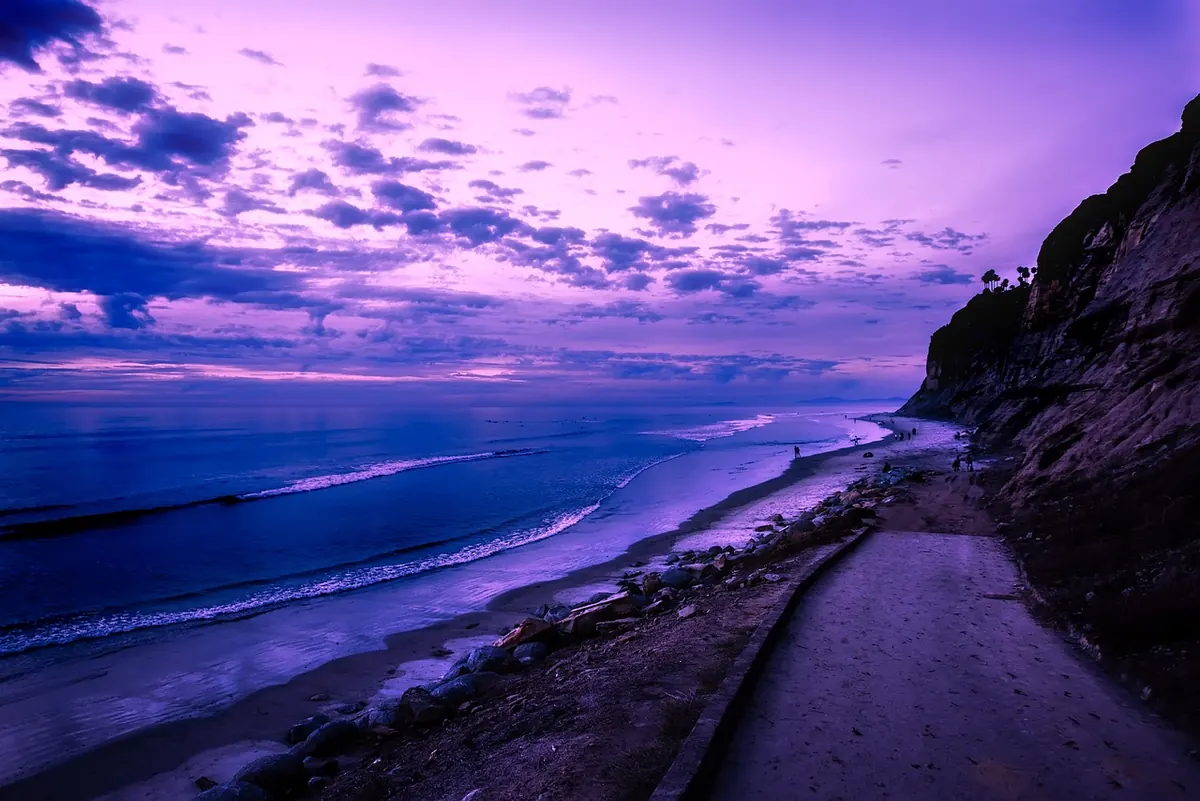
North Norfolk suits a particular sort of holidaymaker: the one who doesn't need much more than a long beach, a decent pub and a horizon with almost nothing on it. The coast runs from Hunstanton round to Cromer, and most of the best of it sits within a designated Area of Outstanding Natural Beauty — saltmarsh, pine woods, creeks and sand that rearrange themselves with every tide.
Three days is enough to get a proper feel for it, as long as you plan around one thing: the tide. Get that wrong and you'll spend a morning looking at water where you wanted sand. Get it right and this stretch of coast is hard to beat.
First, the tide table. North Norfolk has a big tidal range, and it changes what each beach looks like and how far you'll walk. At Holkham, low water can mean a fifteen-minute trudge across the flats before you reach the sea; at Wells, high water comes right up to the beach huts. Tide times are published online and in free local papers, and every harbour and beach car park has them on a board. Screenshot the day's times in the morning and you'll avoid most of the frustration.
Second, boat trips. The seal trips from Morston and Blakeney run seasonally and sell out in school holidays and at weekends, so book a day or two ahead rather than turning up at the quay and hoping. If you're visiting between late autumn and January, that's when the grey seals pup at Blakeney Point and Horsey — wonderful to see, but keep well back and follow any guidance from the reserve staff or boat operator.
Start in Wells. It's a working harbour town with a narrow main street, a quay full of small boats, and a beach that most people underestimate. Park in town or at the beach car park, then either walk out through the pines or take the little seasonal railway that runs between the two.
The beach itself is the postcard: sand, a curve of painted beach huts tucked against the trees, and dunes behind. Carry on walking west and you barely notice the point where Wells becomes Holkham — it's one continuous sweep of sand backed by a belt of Corsican pines.
If you have the legs for it, park at Lady Anne's Drive on another day and walk out to the gap in the pines. It's a proper walk rather than a quick stroll, and the reward is a beach so wide it feels slightly absurd. Keep an eye on the tide and don't wander out onto the flats without knowing when the water turns — the flood tide moves faster than people expect and the channels fill behind you.
If the weather turns, Holkham Hall and its walled garden will absorb an afternoon indoors without complaint.
This is the day to get on the water. Boats leave from Morston Quay and from Blakeney harbour for Blakeney Point, a long shingle spit managed by the National Trust and home to a large colony of grey and common seals. Trips generally last about an hour, and the boats run up to the point so you can watch the seals hauled out on the sand without disturbing them.
You can walk out to the point from Cley on a falling tide, but it's a serious trudge over shingle, and the marsh channels between you and dry land are not somewhere to be caught out. Most people sensibly take the boat.
Back on solid ground, head for Cley Marshes, the Norfolk Wildlife Trust reserve just along the coast. The visitor centre has good views over the scrapes, and the paths are flat enough for an easy hour or two with binoculars. Even if you don't know a redshank from a ruff, it's a lovely place to sit still. From Cley you can walk the Norfolk Coast Path to Blakeney — flat, breezy, and one of the nicest short walks on this stretch.
Push west for your last day. Brancaster beach is another vast one, with a car park behind the dunes and, at low tide, the rusting remains of a wreck offshore — a useful landmark when you're working out how far you've wandered. The neighbouring villages of Brancaster Staithe and Thornham both sit on the marsh, with harbours, sailing dinghies and a couple of very good pubs looking out over the reed beds.
If you want a change of pace, RSPB Titchwell Marsh is a short drive along the coast and has a straightforward path out to the beach, hides along the way, and a café. Then finish in Burnham Market, a Georgian village of brick and flint that's ideal for a last-hour mooch around the independent shops before you point the car home. Burnham Thorpe, a mile or so away, is where Nelson was born, and the village church has a small display about him.
Rain all day? Take the steam train on the North Norfolk Railway from Sheringham to Holt, and spend the afternoon in Holt's bookshops and food halls instead.
North Norfolk eats well, but the good places fill up. Book dinner in advance in summer, and expect Sunday lunches to go early.
Look out for local crab, mussels and samphire on menus; they're at their best in the warmer months and are usually the thing worth ordering.
There's no railway station on the quiet middle stretch of this coast. Trains reach King's Lynn from London and, via the Bittern Line from Norwich, serve Cromer and Sheringham. For Wells, Holkham, Blakeney and Brancaster you really want a car, or a willingness to plan around the coastal bus service that links the villages between Hunstanton and Cromer — check current timetables, as they change with the season.
A few things worth knowing:
Above all, don't over-schedule it. The pleasure of this coast is in the gaps — a slow hour on a nearly empty beach, a pint while the light goes gold over the marsh. Give yourself room for those and three days will feel like considerably more.
Photo: 12019 / Pixabay
How to identify common British seashells, mermaid's purses and other beach finds — plus the simple rules that keep...

British seaside weather can deliver four seasons in one afternoon. Here is a flexible packing list covering layers,...
A month-by-month coastal gardening guide covering shelter, mulching, pruning and planting for colour, with practical...


Coastal living, nature, and seaside inspiration.
